Research Journeys
How Questions Grow into Science, Technology, and Society
My work cannot be fully described as a list of separate research topics.
Each journey began with a fundamental question and grew over many years into
new theories, technologies, applications, and communities.Journey 1
From Artificial Reaction Systems to New Foundations of Computing
Connecting discrete and continuous worlds
I proposed Artificial Reaction Systems as computational models inspired by chemical and biological processes.
The original framework was developed into a hybrid computational system connecting discrete and continuous dynamics. Using concepts from theoretical chemistry, I established its mathematical foundations and further developed rewriting-based approaches for discrete dynamical systems.
This research later expanded through membrane computing toward computational models addressing fundamental questions about the origin of life.


Journey 2
From Molecular Reactions to Artificial Intelligence
Can molecules implement intelligence?
Using fundamental reactions from DNA computing, I developed simple forms of artificial intelligence implemented directly through molecular processes.
This work explored intelligence not only as software running on electronic computers, but as an information-processing phenomenon that can emerge from physical and chemical reactions.
Journey 3
From Simple Network Patterns to Disease Mechanisms
Finding biological meaning in interaction structures
In protein–protein interaction networks, I investigated whether biologically important proteins could be identified through surprisingly simple structural features.
Drug-target proteins were characterized using only their numbers of interactions. This network-based approach was later extended to research on the emergence of lethal pathogenicity in highly pathogenic avian influenza.
The work demonstrates how simple patterns in complex networks can reveal mechanisms relevant to medicine and infectious disease.
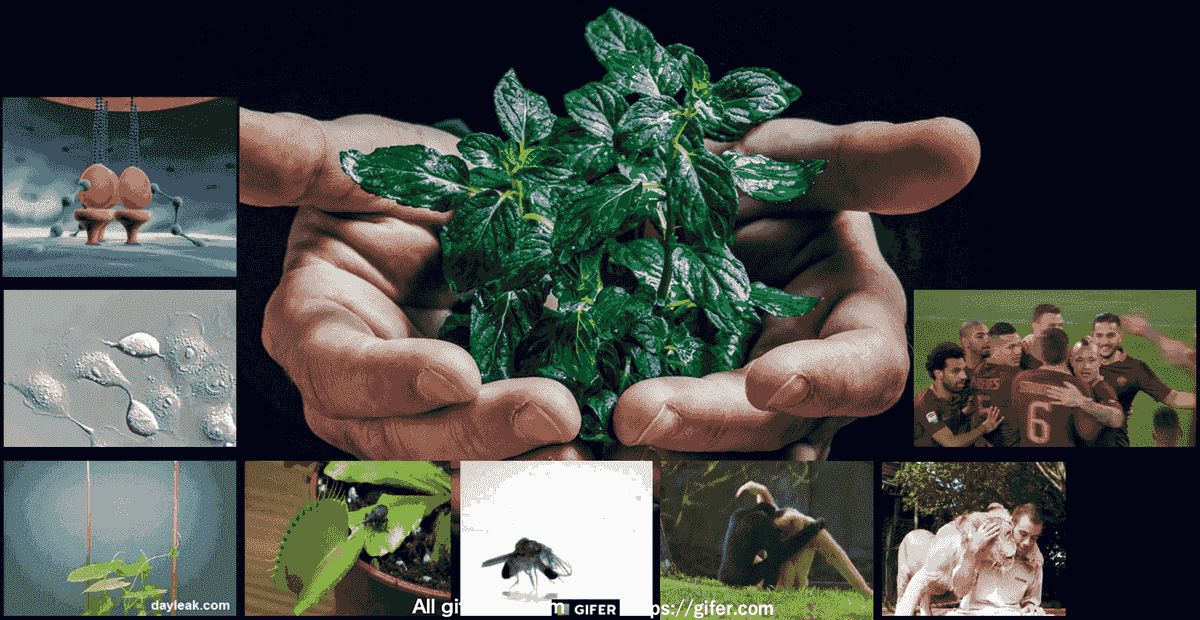
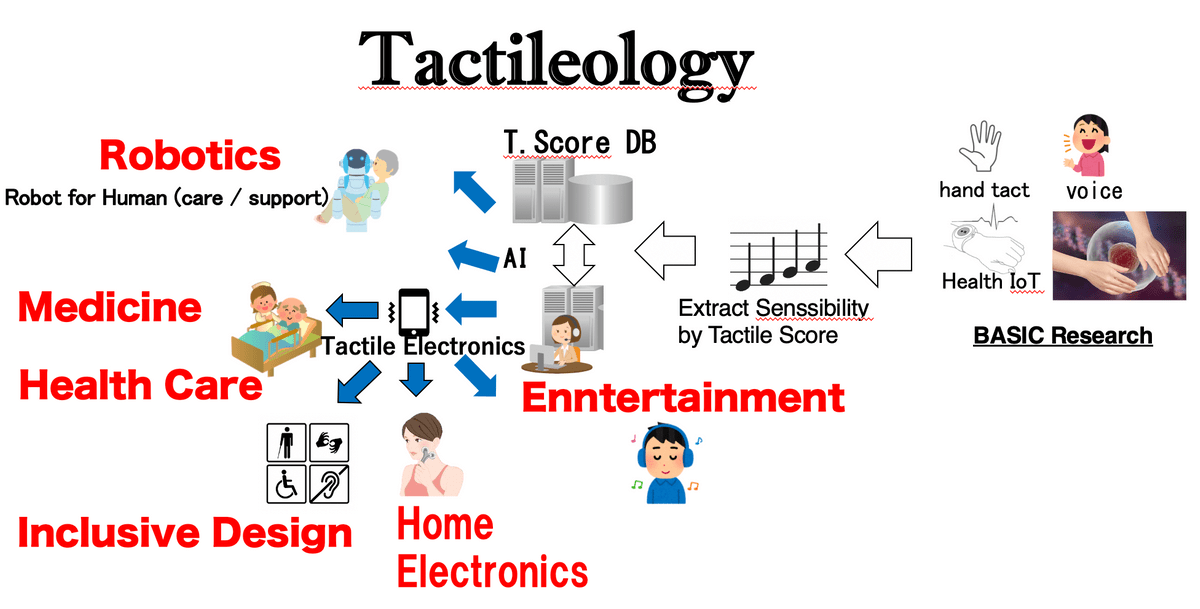
Tactile Sense is the Common Language on this planet
Artificial reaction systems, molecular intelligence, disease mechanisms, and touch may seem like unrelated research subjects. Yet throughout this work, I have been asking the same fundamental question: how do interactions create, transmit, stabilize, and sometimes disrupt information in natural and biological systems?
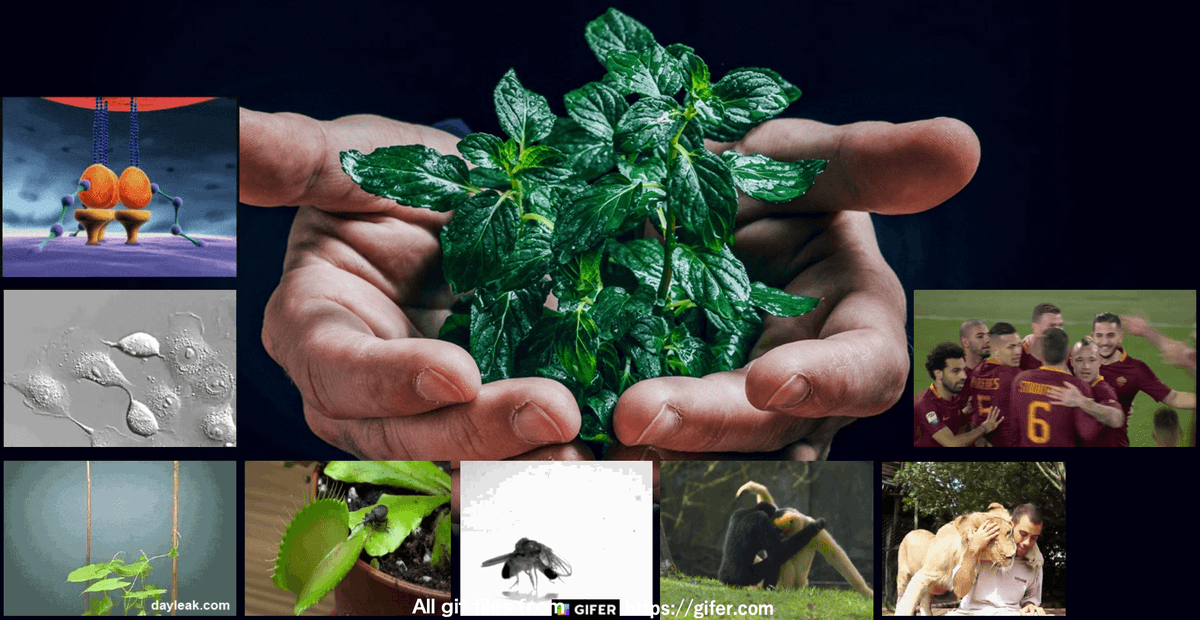
This question eventually led me to touch. In nature, interaction begins with contact: things touch and are touched. From this perspective, touch can be regarded as a fundamental language connecting nature and life. Yet touch had no notation through which it could be written.
Journey 4
From Tactile Score to a New Industry
Digitizing touch and cultivating its social value
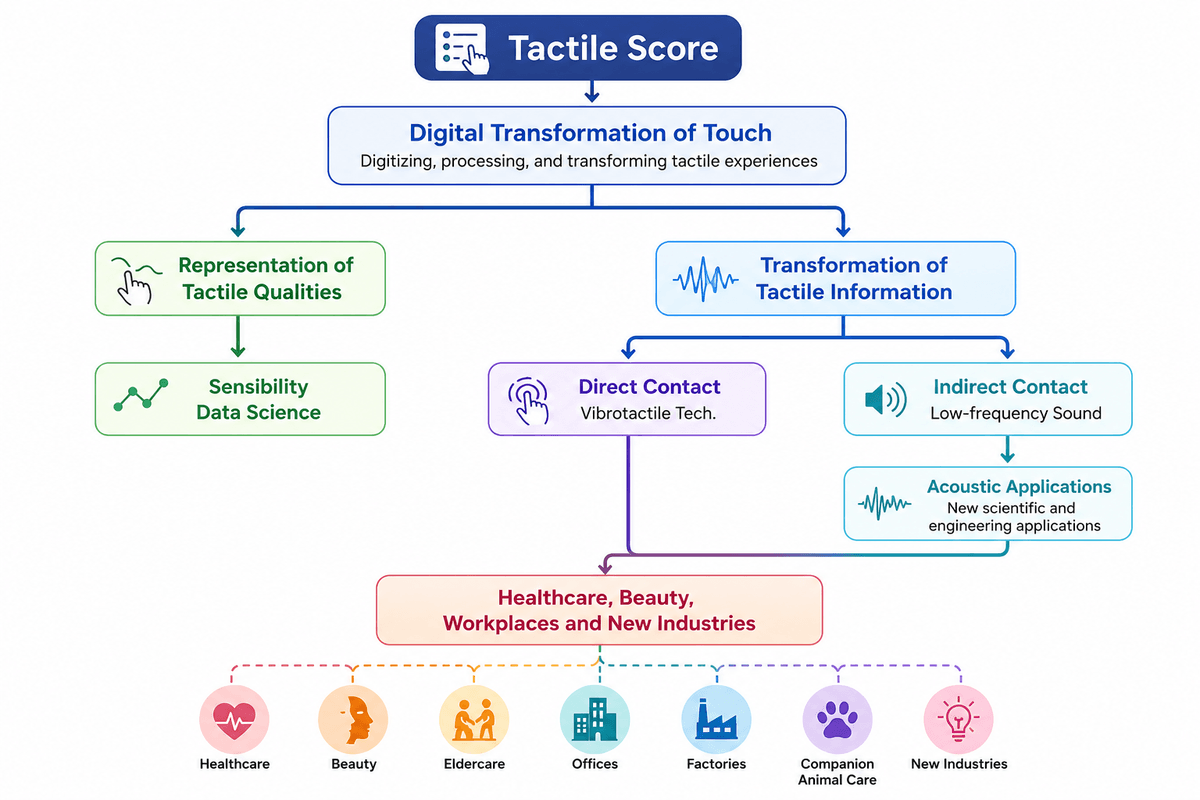
I proposed Tactile Score as a method for representing time-varying tactile information.
This enabled the digital transformation of touch: tactile experiences could be represented, processed, transformed, and reproduced as information.
From this foundation, two technological pathways emerged. In the direct-contact pathway, tactile scores are converted into vibrotactile stimulation delivered to the body. In the indirect-contact pathway, they are transformed into low-frequency sound and transmitted through objects and environments.
The latter pathway also led to the discovery of new acoustic applications of low-frequency sound and to the development of their fundamental physical and acoustic foundations.
In parallel, Tactile Score was extended to represent tactile qualities such as hardness and roughness, opening a path toward sensibility-oriented data science.
These developments now support applications in human and animal healthcare, beauty, eldercare, offices, factories, and workplace environments.
Social Implementation of Vibrotactile TechnologiesGentle tactile stimulation delivered directly to the body— now expanding from workplaces and eldercare to international research.
Field / Challenge Implementation and Collaboration Sites Workplaces &
Manufacturing
(Employee Experience)Kaga Electronics Co., Ltd. — Head Office Tokyo Stock Exchange Prime–listed global electronics groupKAGA FEI Co., Ltd. — Head Office Global semiconductor and electronics-solutions company; approximately 950 employees worldwide; Kaga Electronics GroupKyokuto Electric Co., Ltd. — Manufacturing Workplace Electrical-equipment and electronics manufacturing services company; Kaga Electronics Group; field evaluation in progressMajor Japanese General Contractor — Head Office One of Japan’s large-scale construction and engineering companies Name to be announcedEldercare ALSOK Joylife Co., Ltd. Senior-care operator wholly owned by ALSOK Corporation, one of Japan’s leading security and care-service groupsDeployed at a senior-care facility in Kobe, JapanSports, Beauty &
Well-beingKaga Electronics Co., Ltd. — Head Office Fitness Room Tokyo Stock Exchange Prime–listed global electronics groupGolf Plaza Active AKIBA, Tokyo Large golf retail facility operated by Kaga Sports Co., Ltd., a Kaga Electronics Group companyGolf Studio f — Volvo Showroom, Chiba MinatoGolf Studio f — Lexus Showroom, Kawaguchi Indoor golf and body-care studios located within premium automobile showroomsCompanion-Animal Care Luxury Resort Hotel Large hospitality and resort operator Name to be announcedLAVITA Co., Ltd. — Grooming Room, Kanagawa Pet-care company providing pet retail, grooming, pet-hotel, and related animal-care servicesSleep & Mental
Health (International)London Trusted Therapy, Harley Street, London Specialist private mental-health and psychological therapy practice in central LondonEmpirical research on sleep-related outcomes using a facial vibrotactile deviceSocial Implementation of Acoustic HapticsDesigning the space itself as a tactile medium—from well-being and dementia care to education, music, and acoustic research.
Field / Challenge Implementation and Collaboration Sites Dementia Care Joint clinical research with Akita University confirmed improvement effects Akita University is a Japanese national universityHaptic Well-being
RoomALSOK Joylife Co., Ltd. Senior-care operator wholly owned by ALSOK CorporationDeployed at a senior-care facility in Kobe, JapanShowroom Spatial
DesignLexus Kawaguchi Showroom of Toyota’s global luxury automobile brandTactile spatial design using natural low-frequency acousticsWorkplace Environment
& Well-beingKaga Electronics Co., Ltd. — Head Office Lobby Tokyo Stock Exchange Prime–listed global electronics groupKAGA FEI Co., Ltd. Global semiconductor and electronics-solutions company; Kaga Electronics GroupKyokuto Electric Co., Ltd. Introduced into its manufacturing workplace and employee break roomEducational Environment Meisho Kindergarten, Hayama, Kanagawa Certified early-childhood education and care institutionMusic &
Acoustic DesignKyoto Symphony Orchestra × Yoshimasa Ishibashi “Performative Concert: The Firebird,” presented with Kyoto’s professional municipal orchestra The effects of sound-field generation using Tactile Score–based low-frequency acoustic design were experimentally evaluatedMajor Music Production Company Music production using designed low-frequency acoustics for CDs, concerts, and related applicationsSpatial Acoustics
Research (International)Collaborative fundamental research with institutions in Austria and other countries International research on low-frequency sound fields and acoustic spatial design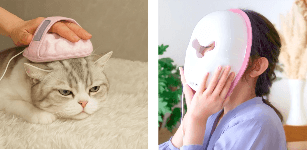
Cultivating Innovation in Society
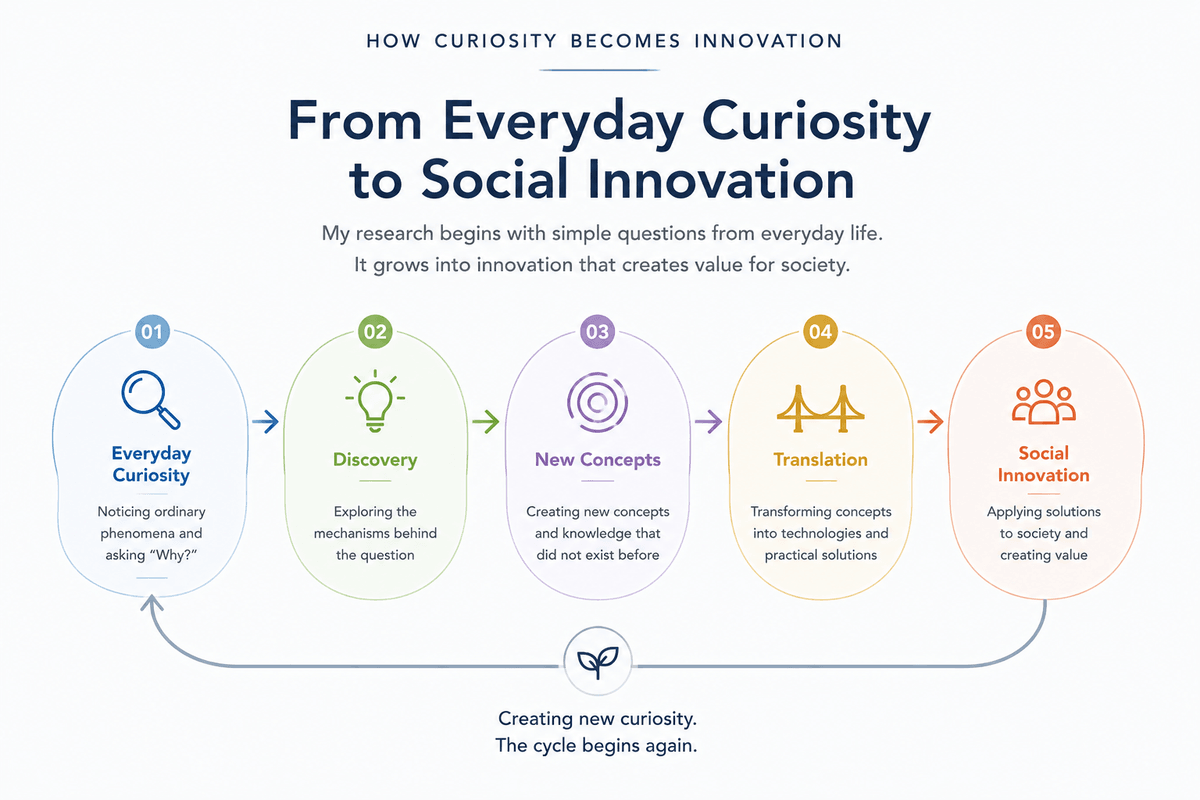
From Everyday Curiosity to a Growing Innovation Ecosystem
Scientific discovery does not end with publication.
I believe that research reaches its full value when it grows into technologies, people, and ecosystems that contribute to society.
The journey that began with Tactile Score has expanded into the Digital Transformation of Touch, leading to both direct-contact vibrotactile technologies and indirect-contact technologies based on low-frequency sound. Along the way, new scientific foundations in tactile information science and low-frequency acoustics have also emerged.
Today, these developments support applications in healthcare, well-being, beauty, eldercare, office environments, manufacturing workplaces, and companion-animal healthcare.
Growing an Industry–Academia Innovation Network
The research is being advanced through long-term collaboration with a growing network of industrial partners, including
Kaga Electronics Co., Ltd. (Tokyo Stock Exchange Prime Market)
ALSOK Joylife Co., Ltd.
Kyokuto Electric Co., Ltd.
Kaga Sports Co., Ltd.
Kaga FEI Co., Ltd.,
etc.
Together, these collaborations have enabled the deployment of tactile digital transformation technologies in senior-care facilities, office environments, manufacturing workplaces, and healthcare-related settings.
Rather than representing a single product or project, these collaborations are gradually forming an industry–academia innovation ecosystem, where scientific discovery, engineering, implementation, and real-world feedback continuously reinforce one another.
Looking Ahead
My goal is not simply to develop new technologies.
It is to cultivate ideas, people, and collaborations that continue to grow beyond the laboratory.
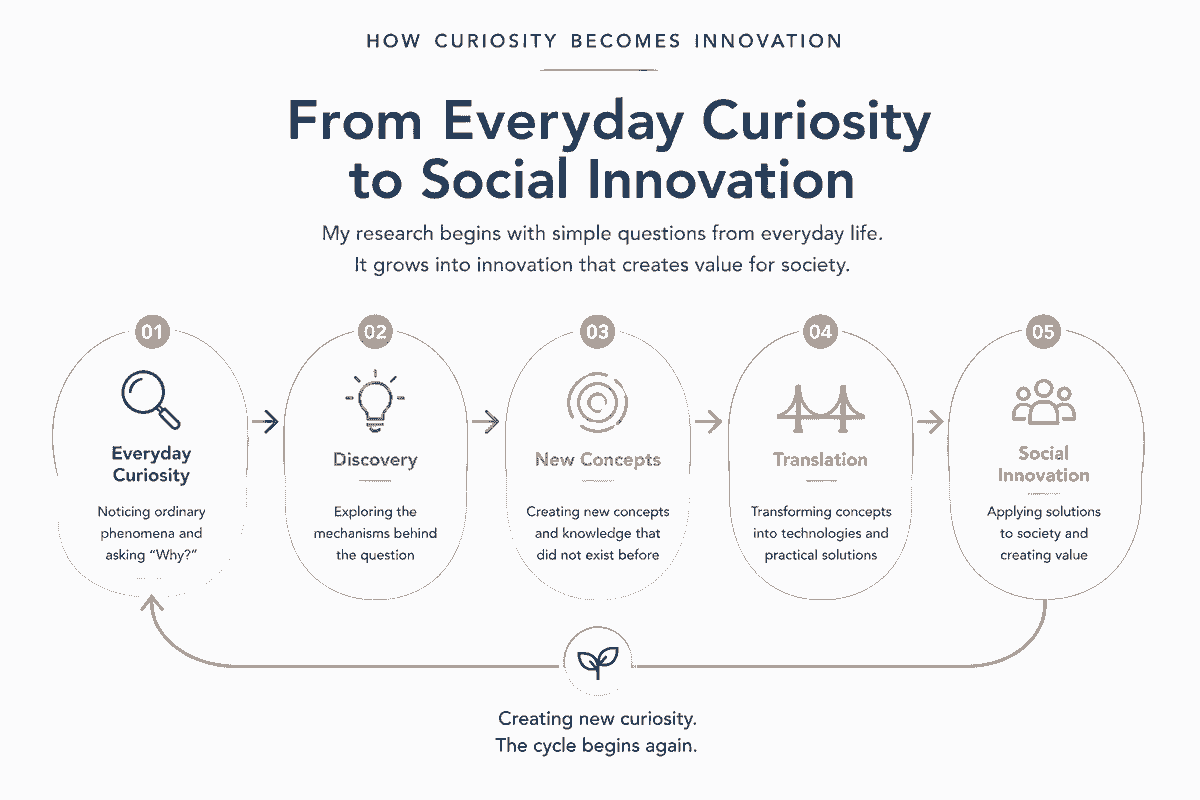
From Everyday Curiosity to Social Innovation — by cultivating ideas, people, and ecosystems.
Scientific discovery is only the beginning.
I believe that research reaches its true value when it contributes to people's lives.
My work therefore extends beyond academic publications, translating scientific discoveries into healthcare, industrial collaboration, education, and new technologies that create value for society.
Cultivating People
From Learning to Creating
My Educational Philosophy
Education is not simply about transferring knowledge.
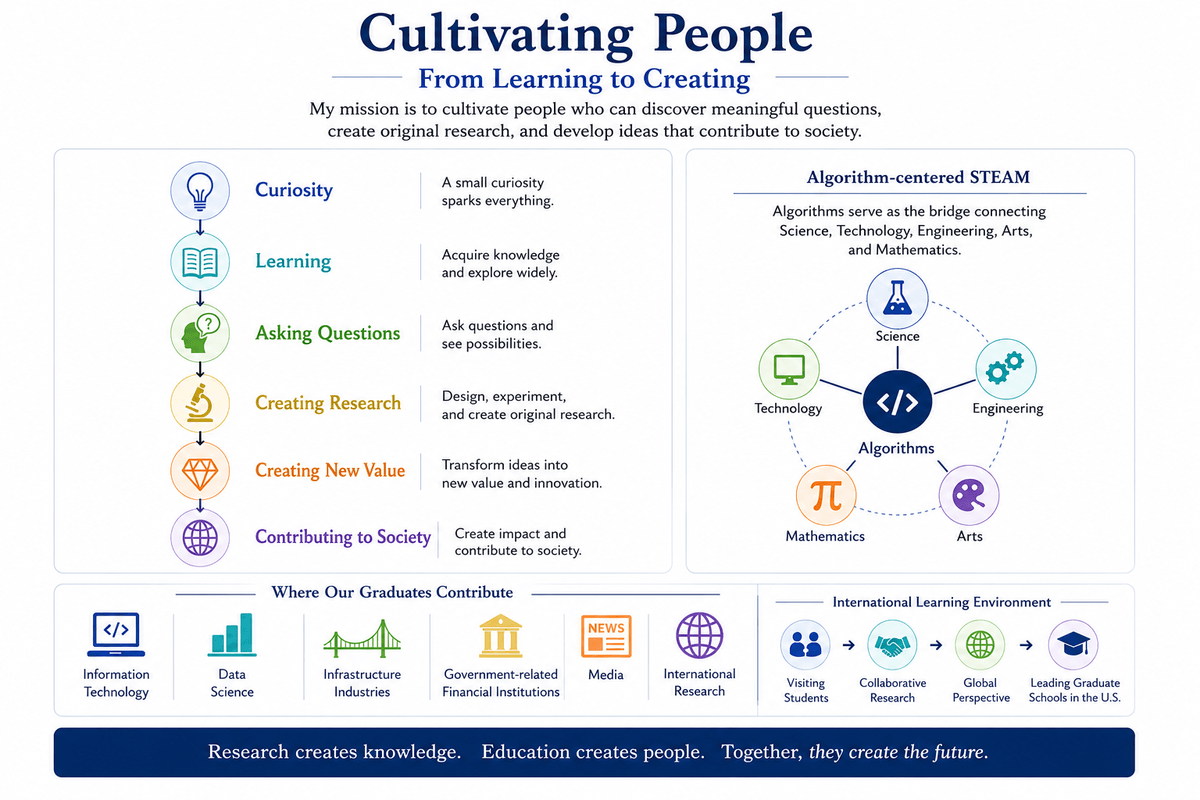
It is about cultivating people who can discover meaningful questions, create original research, and develop ideas that contribute to society.
Throughout my career, I have developed educational approaches that guide students from zero prior knowledge to independent researchers capable of creating and cultivating their own research.
My goal is not merely to teach existing knowledge, but to help students create new knowledge.
Algorithm-centered STEAM
I have also proposed and practiced an algorithm-centered STEAM education, where Algorithms serve as the intellectual bridge connecting Science, Technology, Engineering, Arts, and Mathematics.
Rather than separating disciplines, this approach encourages students to integrate knowledge across fields and create entirely new ideas.
This educational framework has been practiced for many years at Nagoya University as well as in design-oriented education.
Outcomes
Students educated through this approach have pursued diverse careers in
Information Technology
Data Science
Infrastructure Industries
Government-related Financial Institutions
Media
International Research
International collaborative projects involving visiting students have also provided opportunities for students to develop global perspectives, with some continuing their studies at leading graduate schools in the United States.
My Belief
Research creates knowledge.
Education creates people.
Together, they create the future.
I believe that the greatest contribution of a university is not only producing new discoveries, but cultivating people who can continue creating new discoveries long after graduation.
Throughout my career, I have been nurtured by many people, disciplines, and opportunities.
I now hope to give something back—not only through research, but by cultivating people who will create new science and new value for society.
Research creates knowledge. Education creates people. Together, they create the future.
New Book
For sight, there is photography. For hearing, there is musical notation. For touch, there was nothing.
Touch has no "language." That means it cannot be recorded or conveyed to others. Tactile notation was born to break through that barrier.
With tactile notation, the pleasant feel of a hit product, the skill of a master craftsman, the subtle texture of a marketplace — all can now be recorded and transmitted as touch.
Touch is, for the first time, becoming a medium.FREE THIS WEEK ONLY ★ Kindle
An Invitation to Tactileology
Touch, for the first time, becomes a medium
Yasuhiro Suzuki
📖 Get it FREE on Kindleportfolio
・Organic System, Sensibility-AI : 有機AI
Medical&Drug, Automobile (First Section Market in Tokyo Stock Exchange, TSE)
医療・製薬,自動車
・Sensory Communication Technique: 感性通信技術
Sensibility-AI (for major cosmetics companies), Novel Tactile Communication Technique (NTT), Japan-Poland International modern Art exhibition (visual+tactile), Inclusive design (for deafblind people)
感性AI(美容AI・美容業界大手),あたらしい触覚通信技術(NTT), 日本-ポーランド現代芸術展(映像+触覚), インクルーシブデザイン(盲ろう者のための)
・Tactileology Technologies
Home Electronics by Tactileology Tech. International Patent (First Section Market in TSE),
触覚学の技術を用いた家電(国際特許)電子メーカ(東証1部)

お気軽にお問い合わせください
portfolio
・Organic System, Sensibility-AI : 有機AI
Medical&Drug, Automobile (First Section Market in Tokyo Stock Exchange, TSE)
医療・製薬,自動車(東証1部)
・Sensory Communication Technique: 感性通信技術
Sensibility-AI (for major cosmetics companies), Novel Tactile Communication Technique (NTT), Japan-Poland International modern Art exhibition (visual+tactile), Inclusive design (for deafblind people)
感性AI(美容AI・美容業界大手),あたらしい触覚通信技術(NTT), 日本-ポーランド現代芸術展(映像+触覚), インクルーシブデザイン(盲ろう者のための)
・Tactileology Technologies
Home Electronics by Tactileology Tech. International Patent (First Section Market in TSE),
触覚学の技術を用いた家電(国際特許)電子メーカ(東証1部)
ご相談をいただいて,内容に応じて進め方をご一緒に検討します.以下で「ご寄付」が少しわかりにくいかもしれませんが,研究内容,教員名を明示の上でご寄付をいただいて,研究をスタートさせる方法です.
We will consult with you and discuss how to proceed depending on the content. Although "donation" may be a little difficult to understand below, it is a method to start a research by giving a donation after clearly indicating the research content and faculty member's name.
名古屋大学 学術コンサルティング
学術コンサルティングは、企業様などからの委託により、教育、研究及び技術上の専門知識に基づき指導及び助言を行い、委託者の業務又は活動を支援するものす.
(名古屋大学が学術コンサルティング料を申し受けます).
Academic consulting, by entrusting from companies, etc., provides guidance and advice based on specialized knowledge in education, research and technology, and supports the work or activities of the contractor. (Nagoya University accepts academic consulting fees).

学術研究・寄付(名古屋大学)
寄附金は、名古屋大学における学術研究や教育の充実などのために民間企業・団体・個人様から現金や有価証券などをお受けする仕組みです.名古屋大学へのご寄付,コラボレーションのために小研究室をご指名でのご寄付が可能です.
The donation is a mechanism that accepts cash and securities from private companies, organizations, and individuals to enhance academic research and education at Nagoya University. We can accept a donation to Nagoya University or donate it to our lab. for collaboration through Nagoya Universit.

名古屋大学 共同研究・受託研究
共同研究:民間企業様等の研究者と、契約に基づき、対等の立場で共通の課題について研究に取り組み、優れた研究成果を生み出すことを目的とするるものです。
受託研究:民間企業様等からのご委託を受けて、契約に基づき研究を行い、その成果を委託者に報告するものです.
Joint research: With the purpose of contracting with researchers such as private companies, they will work on common issues on an equal footing and produce excellent research results.
Outsourced research: Under contract from a private company, etc., research is conducted based on the contract, and the results are reported to the contractor.
お気軽にお問い合わせください
from past works
これまでの事例から

Tactile Animation
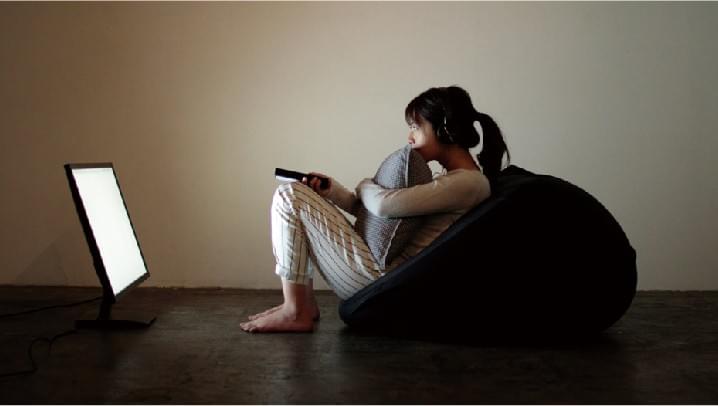
Back Ground "Tactile" not Music. Tactileology is a science&engineering of time-varying tactile sense like a melody; which enable us to use Tactile Sense like a Music. Collaboration with an Tactile Artist & NTT we created an "Tactile Animation; animation + melody of various tactile. (ICC art-museum, 2018, her cushions vibrate the body, while watching the animation).
触覚学は音楽のメロディのように時間変化する触覚を扱います.触覚アーティストとNTTと共同して,アニメーションにメロディのように時間変化する触覚を組み合わせた作品を制作しました(ICC美術館, 2018)
- 触覚学 Tactileology
tactile sense is a universal language in nature